Diopside디옵사이드
The emerald tear of the Earth, restoring emotional balance and inner strength.
- Origin
- Russia (Siberia), Pakistan, South Africa
- Mohs Hardness
- 5.5 ~ 6.5
- Crystal Family
- Pyroxene
About This Stone
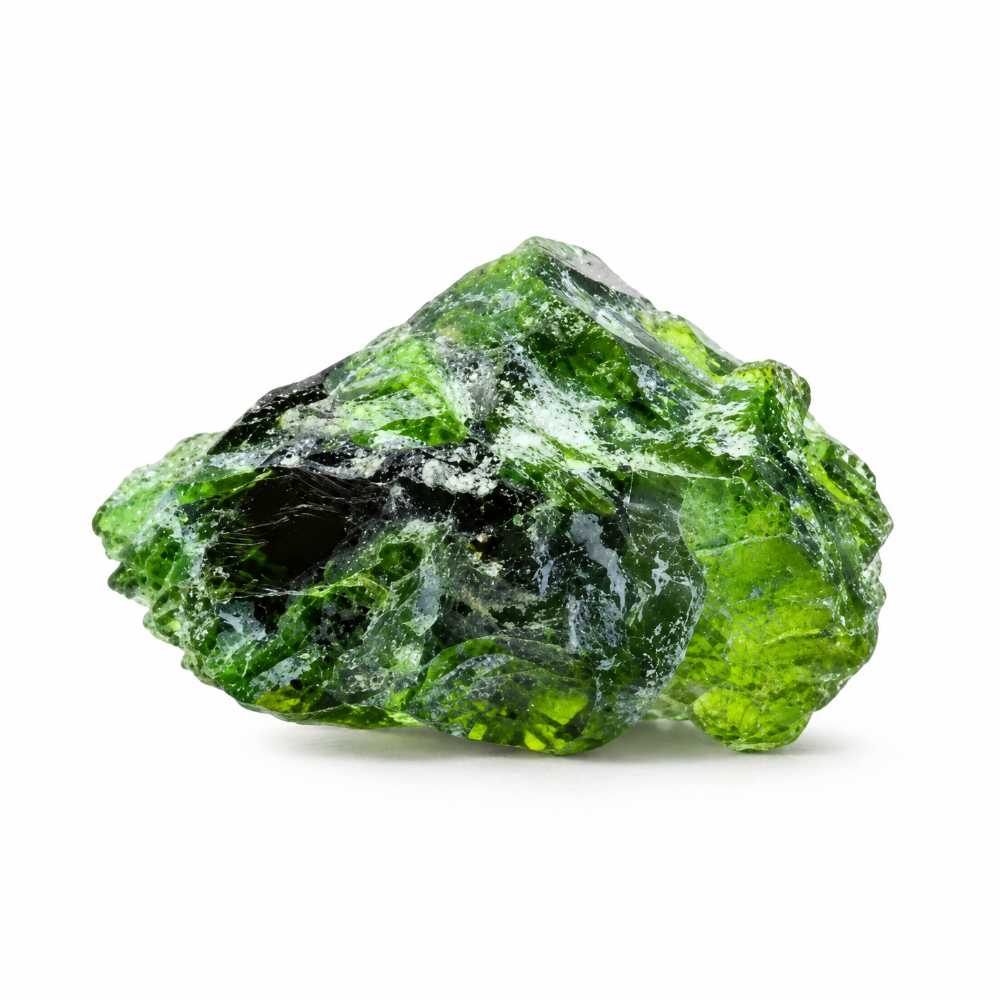
Diopside takes its name from the Greek words meaning 'double' and 'appearance,' referring to the way its crystal structure can appear differently depending on the viewing angle. The vivid green variety from Siberia, known as Chrome Diopside, is often called the 'Siberian Emerald' for its remarkable resemblance to emeralds.
Diopside
"A Green Teardrop Holding the Earth's Heartbeat, for Emotional Recovery and the Healing Power of Tears"
| Element | Hardness | Main Origins | Main Colors |
|---|---|---|---|
| Wood, Fire | 5.5 ~ 6.5 | Russia (Siberia), Pakistan, South Africa | Chrome green, black (star), dark green |
01. Introduction and History
Diopside's name comes from the Greek "dis" (double/two) and "opsis" (appearance), reflecting the physical property that its crystal structure can appear differently depending on the viewing angle. The vivid green "chrome diopside" mined in Siberia, Russia, closely resembles emerald in color, earning it the nickname "Siberian Emerald." Since ancient times, this stone has been regarded as a channel connecting to Mother Earth, carrying the mystical legend that it formed on earth from fragments of a fallen star.
02. Symbolism and Energy
Diopside is a stone symbolizing "catharsis" (emotional release) and "recovery." Known as the "stone of tears," it's said to help release long-suppressed sorrow or hurt, purifying the soul in the process.
- Key properties: Relief from emotional overload, easing mental and physical tension, stimulating intellectual curiosity for study or research.
- Direction of energy: Rather than a sharp, cold energy, it radiates a gentle, warm healing energy, like the vitality of a forest.
- Chakra connection: Heart Chakra. Said to untangle knots in the chest and restore the courage to love again.
03. Color and Quality
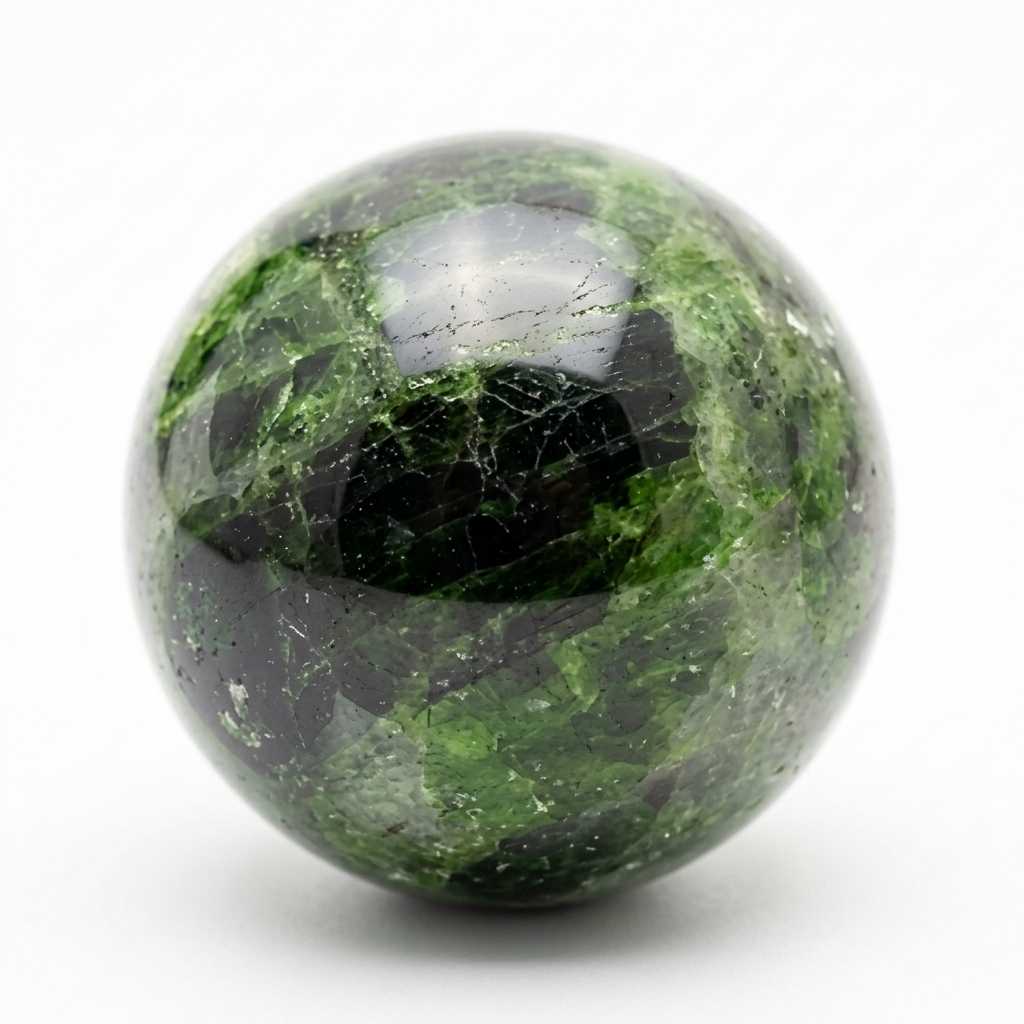
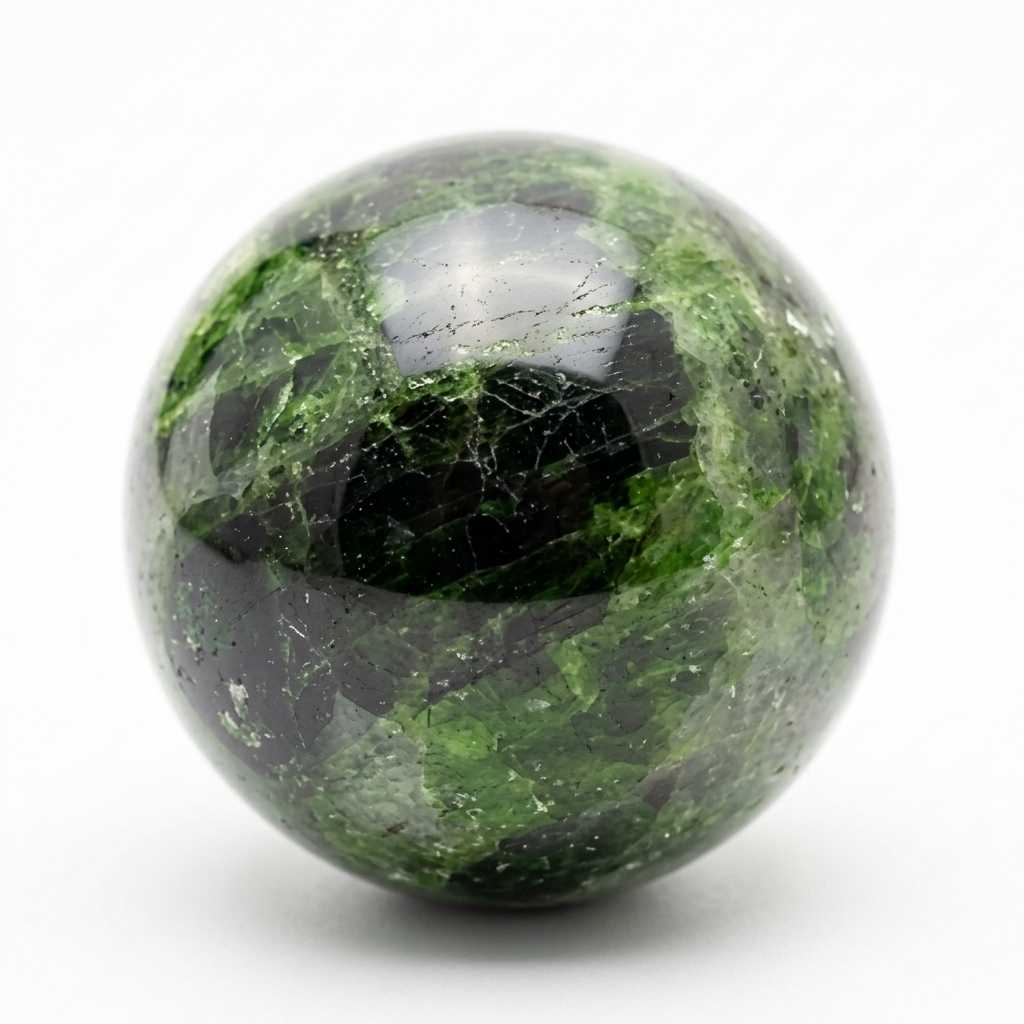
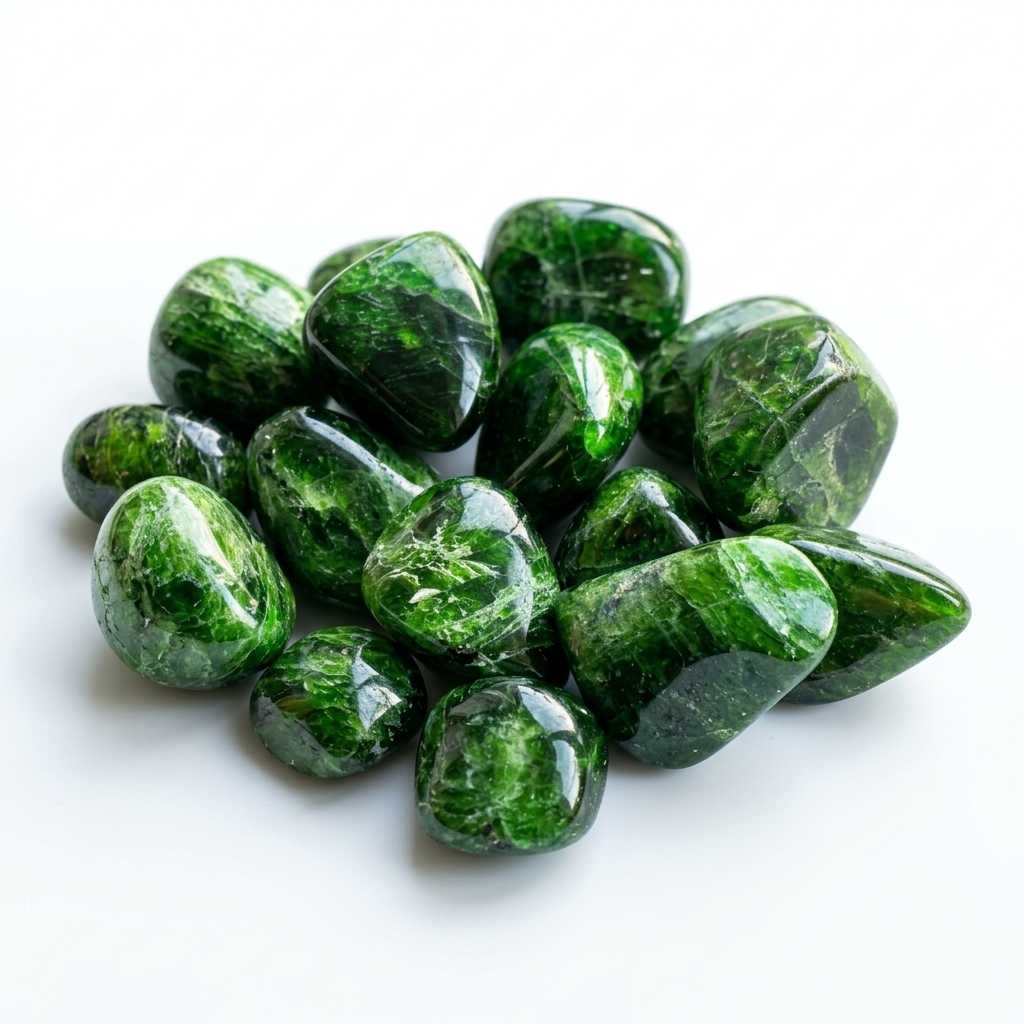
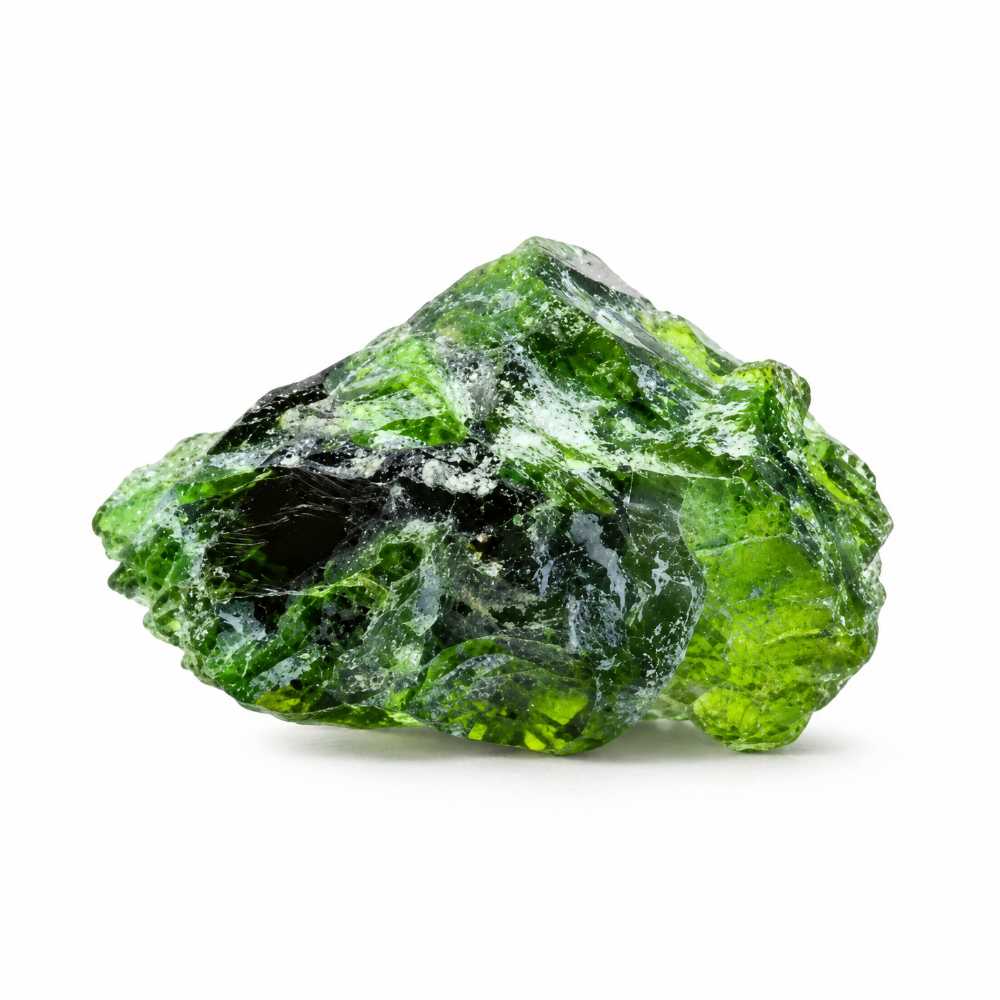
Diopside is a stone of striking contrast, ranging from transparent green to black varieties showing a cross-shaped star effect.
- Visual characteristics: The most famous form, chrome diopside, shows a deep, transparent green as if a forest had been captured in stone. "Star diopside," by contrast, is black with a four-rayed star of light (asterism) appearing on its surface.
- Value assessment: For green diopside, value rises with a vivid "apple green" or "vivid green" color — bright enough to avoid looking nearly black, yet as clear as emerald.
04. Fortune Information
- Birthstone: Not an official monthly birthstone, but used to complement the vibrant energy of May and August.
- Zodiac: Said to help soften Virgo's (Aug 23 – Sep 22) analytical mind, and to protect the sensitivity of Pisces (Feb 19 – Mar 20).
- Five-elements affinity: Carries the powerful vitality of Wood along with the inner passion of Fire. Especially recommended for those feeling listless in daily life, or who feel a heaviness in the chest from having no outlet for their emotions, as well as city dwellers who need a connection with nature.
05. Curation
- Pairs well with:
- + Peridot: Doubles positive energy, chasing away low moods and brightening your inner light.
- + Lepidolite: Helps dissolve fear of change, supporting peaceful sleep through emotional release.
- Recommended use: Wear it as a necklace that rests near the chest — said to smooth the flow of emotion and ease relationship-related stress. During meditation, placing it in your left palm is said to help you absorb the earth's steady energy.
06. Care Guide
Diopside has lower hardness than many gemstones and is somewhat prone to impact damage, so gentle handling is essential.
- Cleaning: Use only lukewarm water and a soft cloth. Never use an ultrasonic or steam cleaner, as they can cause cracking.
- Cleansing: Sound cleansing (singing bowl) or resting it on clear quartz chips are the safest methods. Avoid soaking it in water for long periods.
- Precautions: Prone to scratching, so store it separately from other gemstones. It's also sensitive to heat and can change color, so avoid prolonged exposure to cooking heat or strong lighting.